
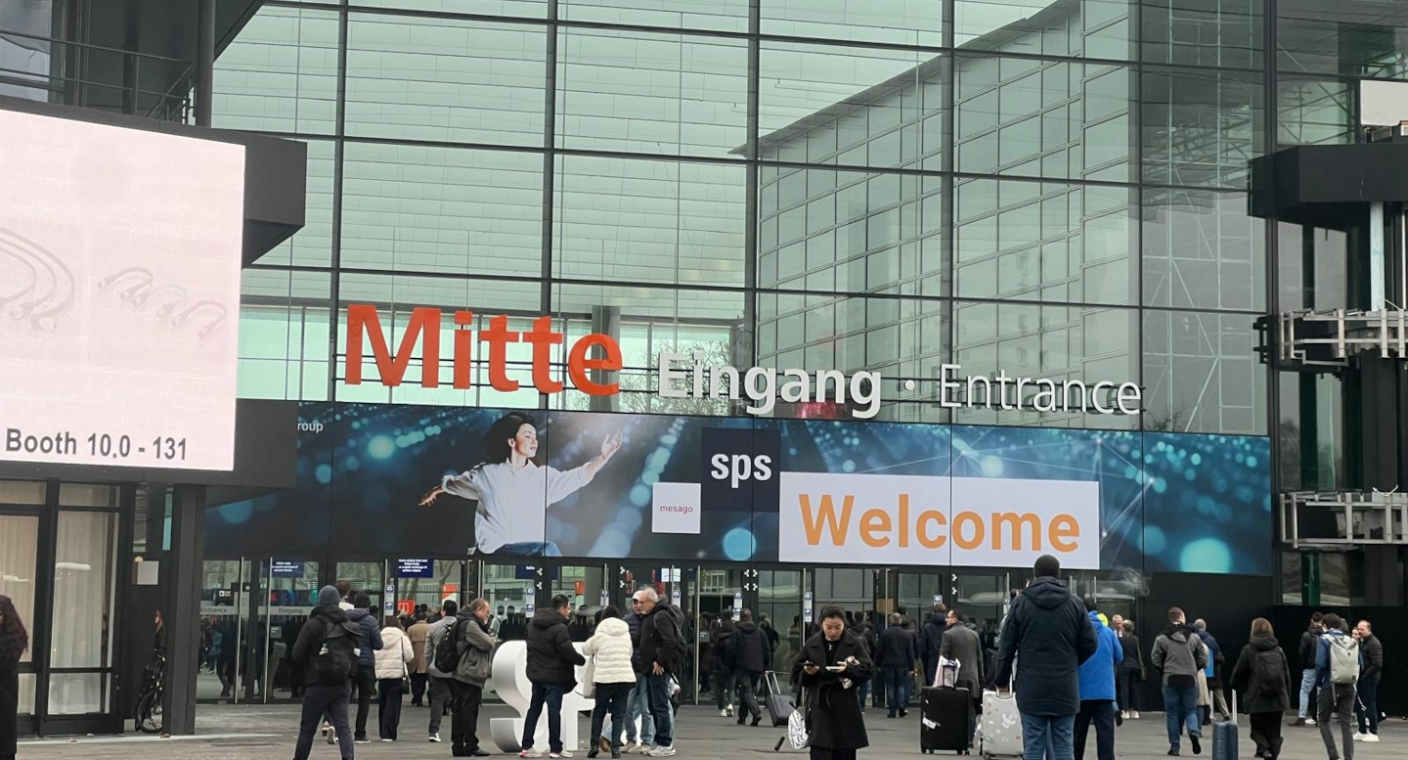

We attended SPS, the Smart Production Solutions trade fair, in Nuremberg last month, and it was a reminder of why this event remains the go-to exhibition for industrial automation.
Over three days, more than 1,000 exhibitors from around the world converged to showcase the latest in smart production and automation – among them, a healthy mix of established industry leaders and newcomers.
Indeed, the scale was impressive, with 56,000 visitors and 122,000 square metres of exhibition space, but what really stood out was the substance. Walking the halls, it became clear that AI, industrial IoT and digitalisation really are changing how manufacturing works. And a theme running through almost every conversation and product demonstration was sustainability.
The trends shaping automation
AI in automation was everywhere at this year's show, with exhibitors demonstrating practical applications which are already delivering results in factories today.
Industrial IoT and smart manufacturing dominated the specialist programme, with keynotes exploring how connected systems are creating more responsive, efficient production environments. Cybersecurity came up frequently too – as systems become more connected, protecting them becomes more critical.
Yet the real story at SPS 2025 was how these trends feed into sustainability. The message from exhibitors was consistent: digitalisation and AI are the primary tools for optimising energy use in manufacturing. Companies showed how industrial AI optimises production, improves energy efficiency and accelerates carbon reduction.
We saw scalable, energy-efficient solutions designed for smart factories. Predictive analytics for maintenance that cuts waste. Tools that quantify decarbonisation impact. Energy solutions for water, HVAC and industrial utilities with proven reduction benefits. The examples were numerous and, importantly, grounded in real-world application rather than aspiration.
Who was there?
The mix of exhibitors reflected the industry's breadth. Major players such as Siemens, ABB, Phoenix Contact, Beckhoff and Wago attended alongside numerous start-ups bringing fresh thinking to automation challenges.
What struck us was how companies of all sizes were addressing the same fundamental question: how can automation technology make manufacturing more sustainable?
The communication gap
This is where things get interesting for both the automation and plastics industries. Automation companies have developed genuinely transformative sustainability solutions. The problem? Often these firms struggle to communicate their value effectively to one of their primary target markets: plastics manufacturers.
These solutions are highly technical. AI-driven optimisation, smart energy management, predictive maintenance platforms… these are sophisticated systems that deliver real benefits, but explaining those benefits to plastics decision-makers is not always straightforward. The automation industry is looking to the plastics sector to adopt these sustainability solutions, yet the technical complexity makes it difficult to articulate the added value in ways that resonate.
The plastics trade press understands polymer production and processing well. What they are less familiar with is how smart AI automation can enable more sustainable polymer manufacturing. However, these stories (when told properly) are exactly what the plastics industry needs to hear. There is a knowledge gap, and it is creating a barrier between two industries that should be working more closely together.
Where EMG fits in
EMG works with players in both the plastics and automation sectors, which puts us in a unique position. We understand the technology well enough to grasp what automation companies are offering, and we know how to communicate it to plastics industry audiences.
We help automation companies develop clear messaging that works for different audiences within the plastics sector. Our relationships with plastics trade publications mean we can establish media relations strategies that give automation innovations proper visibility. Through content marketing, we translate complex technical capabilities into understandable benefits that matter to decision-makers. We're even adapting content for LLM models now, making sure sustainability stories reach audiences through these emerging channels.
Our sustainability communication expertise is particularly relevant here. We know how to craft sustainability narratives that avoid greenwashing whilst making the business case clear. And because we work across both industries, we can bridge the communication gap which is currently placing a limit on collaboration.
SPS 2025 reinforced something we already knew: the automation sector has developed solutions that can genuinely help plastics manufacturers become more sustainable. The challenge now is making sure the right people understand what is available and why it matters. This is what we do.
